Traditional Irish Soda Bread: No Yeast, No Fuss, Just Pure Comfort

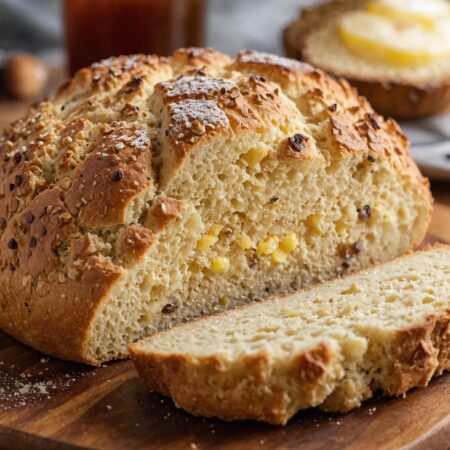
Traditional Irish Soda Bread: No Yeast, No Fuss, Just Pure Comfort
A traditional Irish soda bread made with just flour, buttermilk, baking soda, and salt, with optional raisins or currants for a classic twist.
- Total Time: 50
- Yield: 8
Ingredients
🥄 2 cups (500g) all-purpose flour
🥄 1 teaspoon salt
🥄 ¾ cups (420ml) buttermilk
🥄 1 tablespoon granulated sugar
🥄 ½ cup raisins or currants
Instructions
👨🍳 Preheat oven to 425°F (220°C). Lightly grease a baking sheet or line it with parchment paper.
👨🍳 In a large mixing bowl, whisk together the flour, baking soda, and salt until well combined.
👨🍳 If using sugar, add it to the dry ingredients and mix thoroughly.
👨🍳 If using raisins or currants, toss them in a small amount of flour first to coat them lightly.
👨🍳 Pour the buttermilk into the dry ingredients and mix gently with a wooden spoon or your hands until a soft dough forms.
👨🍳 Turn the dough onto a lightly floured surface and gently shape it into a round or oblong loaf.
👨🍳 Place the shaped bread onto the prepared baking sheet.
👨🍳 Bake for 30–35 minutes, or until the top is golden brown and the bread sounds hollow when tapped on the bottom.
👨🍳 Remove from the oven and let cool on a wire rack for at least 10 minutes before slicing.
Notes
Store in an airtight container at room temperature for up to 3 days. Reheat in a 350°F oven for 5–10 minutes if desired.
- Prep Time: 15
- Cook Time: 35
- Category: Main Course
- Cuisine: Irish
Nutrition
- Calories: 350
- Sugar: 8
- Sodium: 400
- Fat: 12
- Carbohydrates: 45
- Fiber: 5
- Protein: 15
Irish soda bread has long been the heart of the Irish kitchen—a humble, no-fuss loaf that delivers deep comfort and a true taste of tradition. This simple, versatile bread requires no yeast, no long rise times, and no complicated techniques. With just a few pantry staples, it’s a perfect recipe for both beginners and seasoned bakers alike. Whether you’re serving it alongside a hearty stew, slicing it for toast, or enjoying it with butter and jam, this bread brings warmth and nostalgia to every bite. With its soft crumb, slightly tangy flavor, and golden crust, traditional Irish soda bread is a staple that celebrates the beauty of simplicity.

Ingredients List
- 2 cups (500g) all-purpose flour – The workhorse. It gives our bread structure. I don’t recommend bread flour here—its higher protein can make the loaf tough. All-purpose is your perfect, reliable friend.
- 1 teaspoon baking soda – NOT baking powder. This is our rising agent. It’s going to react with the acid in the buttermilk to create those lovely bubbles. Make sure yours is fresh for maximum lift!
- 1 teaspoon salt – Crucial! This isn’t just for flavor; it strengthens the gluten network slightly. Don’t skip it. I use fine sea salt.
- ¾ cups (420ml) buttermilk – The magic liquid. Its tang and acidity are non-negotiable for authentic flavor and the chemical reaction with the baking soda. Chef’s Insight: No buttermilk? No panic. Make a “soured milk” by adding 1 tablespoon of white vinegar or lemon juice to a measuring cup, then filling it to the 1 ¾ cup line with regular milk. Let it sit for 5 minutes until it curdles slightly. Works like a charm.
- 1 tablespoon granulated sugar (optional) – A tiny hint of sweetness that beautifully complements the tang. It’s traditional in some Irish families, not in others. I add it because I love the subtle balance it creates. It won’t make the bread sweet.
- ½ cup raisins or currants (optional, but highly encouraged for the classic twist) – These little bursts of sweetness are the classic addition. I prefer currants as they’re smaller, but raisins work great. Pro-tip: toss them in a bit of the measured flour first—this helps prevent them from sinking to the bottom during baking.
Instructions
- Preheat your oven to 425°F (220°C). Lightly grease a baking sheet or line it with parchment paper.
- In a large mixing bowl, whisk together the flour, baking soda, and salt until well combined. If using sugar, add it to the dry ingredients and mix thoroughly.
- If using raisins or currants, toss them in a small amount of flour first to coat them lightly. This step prevents them from sinking to the bottom during baking.
- Pour the buttermilk into the dry ingredients and mix gently with a wooden spoon or your hands until a soft dough forms. Do not overmix—this can lead to a tough texture.
- Turn the dough onto a lightly floured surface and gently shape it into a round or oblong loaf. If you prefer a more rustic look, simply press the dough into a flat round and cut a shallow cross on top with a sharp knife.
- Place the shaped bread onto the prepared baking sheet.
- Bake for 30–35 minutes, or until the top is golden brown and the bread sounds hollow when tapped on the bottom.
- Remove from the oven and let cool on a wire rack for at least 10 minutes before slicing.
Tips for Perfect Irish Soda Bread
- Fresh Baking Soda Matters: Baking soda is essential to the rise of the bread. If it’s old or not fresh, your loaf may not rise properly, resulting in a dense, flat texture. Always check the expiration date.
- Don’t Overmix: Mixing the dough too much will activate the gluten excessively, leading to a chewy or tough loaf. A gentle mix is key to achieving the right texture.
- The Buttermilk Reaction: The acid in buttermilk reacts with the baking soda to create carbon dioxide, which helps the bread rise. If you’re using soured milk instead, ensure the milk has curdled slightly to mimic the acidity of buttermilk.
- Storage and Serving: Once cooled, store your soda bread in an airtight container at room temperature for up to 3 days. It’s excellent sliced and buttered, or as a side to soups and stews.
- Make Ahead: While the bread is best eaten fresh, it can be made ahead and reheated in a 350°F oven for 5–10 minutes for a warm, fresh taste.
Conclusion
Traditional Irish soda bread is more than just a loaf—it’s a symbol of home, tradition, and comfort. Its simplicity belies its rich flavor, and the joy it brings to the table is immeasurable. Whether you’re a seasoned baker or trying your hand at a new recipe, this bread is a perfect introduction to the warmth of Irish cuisine. With its soft interior, slightly tangy note, and golden crust, it’s no wonder this recipe has remained a staple in kitchens for generations. So, roll up your sleeves, gather your ingredients, and let the comforting aroma of fresh-baked soda bread fill your home.