Why settle for store-bought bagels when homemade takes just a few hours and tastes infinitely better? This recipe transforms simple ingredients into perfectly chewy, crispy bagels. The secret is in the yeast fermentation and the boiling step before baking. You’ll have freshly made, deliciously flavored bagels ready in under 3 hours.
Print
Freshly Made Bagels: The Perfect Homemade Recipe
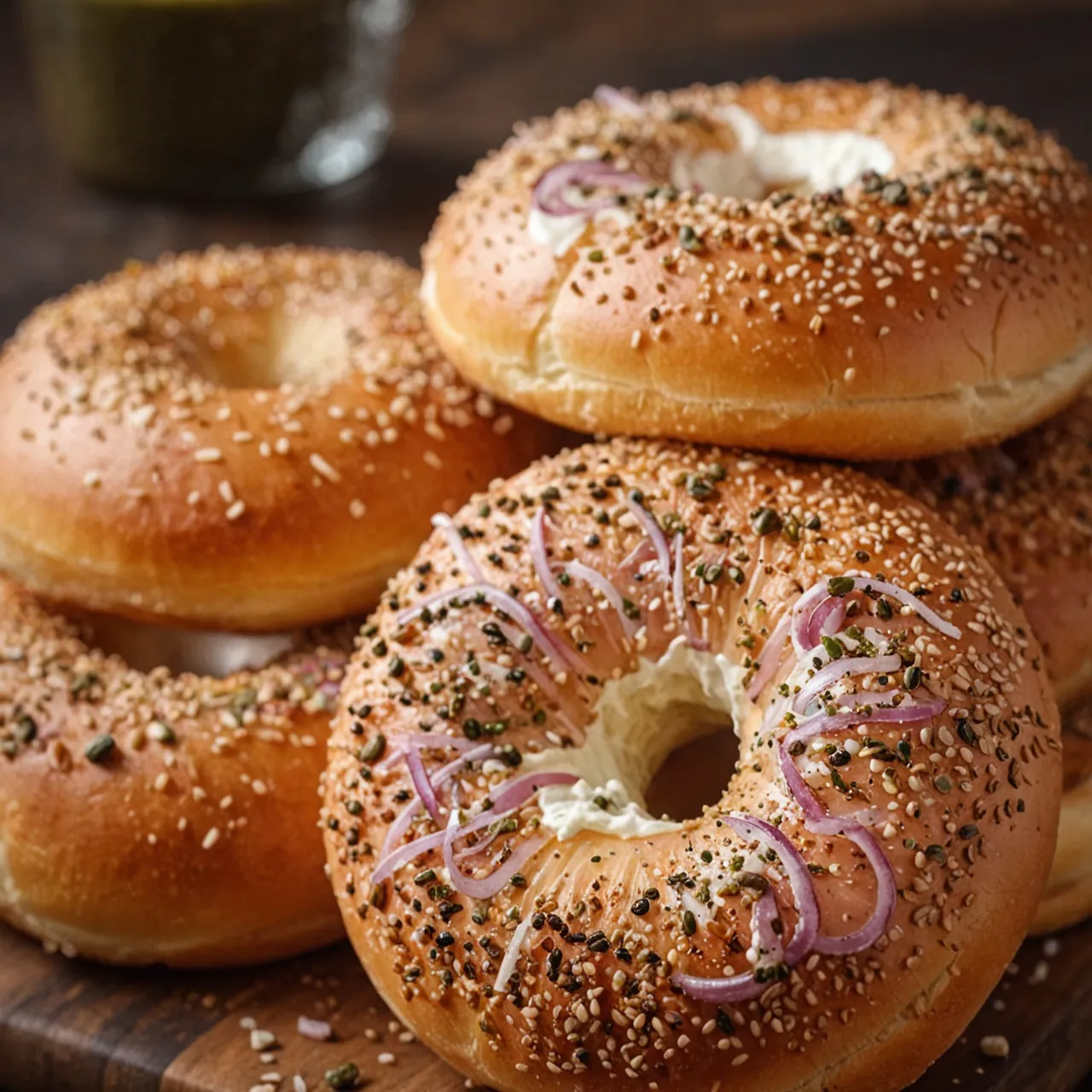
Homemade bagels made with yeast, flour, and water, boiled and then baked to perfection
- Total Time: 55
- Yield: 8-10
Ingredients
✓ 1 packet (7g) active dry yeast
✓ 1 tbsp sugar
✓ 3 cups all-purpose flour
✓ 1 tbsp salt
✓ 1 tbsp brown sugar
✓ 1 tbsp honey or barley malt syrup
✓ 1 egg (for egg wash)
✓ Toppings of choice
Instructions
✓ Combine yeast, warm water, and sugar to activate the yeast
✓ Mix flour, salt, brown sugar, and honey or barley malt syrup in a large bowl
✓ Add the yeast mixture to the dry ingredients and knead for 10 minutes
✓ Let the dough rise for 1 hour
✓ Divide the dough into 8-10 pieces and shape into bagels
✓ Boil the bagels in water with sugar or malt syrup for 2 minutes on each side
✓ Bake the bagels in a preheated oven at 400°F (200°C) for 20-25 minutes
Notes
For a crispy crust, ensure the bagels are boiled for the right amount of time and baked at the correct temperature
- Prep Time: 30
- Cook Time: 25
- Category: Bread
- Cuisine: Jewish
Nutrition
- Calories: 250
- Sugar: 5
- Sodium: 300
- Fat: 5
- Carbohydrates: 40
- Fiber: 2
- Protein: 10
The Importance of Yeast in Bagel Making
Yeast is the backbone of any good bread, and bagels are no exception. The yeast fermentation process is what gives bagels their characteristic chew and rise. To activate the yeast, we need warm water (around 110°F) and a bit of sugar to feed it. This combination will get the yeast fermenting, producing carbon dioxide and causing the dough to rise.
Ingredient Roles and Ratios
Understanding the role of each ingredient is crucial for making perfect bagels. The all-purpose flour provides structure, salt enhances flavor, and brown sugar adds a hint of earthy sweetness. The ratio of these ingredients is also important; too much sugar can lead to an overly sweet bagel, while too little salt can result in a bland taste. The yeast, of course, is the key to fermentation, but it must be balanced with the right amount of warm water to activate it properly.

The Science Behind Bagel Boiling
Boiling bagels before baking is a step that many skip but is essential for creating that perfect crust. The boiling process, typically done in water with a bit of sugar or malt syrup, serves two purposes: it creates the crust and gives the bagels their distinctive shape. The brief boil helps to set the shape of the bagel, ensuring it doesn’t spread too much during baking, and the sugar or malt in the water contributes to a richer, more caramelized crust.
Troubleshooting Common Bagel Issues
Too dense? You might have overworked the dough or not let it rise long enough. Too flat? Perhaps the yeast wasn’t activated properly, or the boiling time was off. Ensuring the right environment for yeast fermentation (warm, draft-free, and sufficient time) and not overmixing the dough are critical steps in avoiding dense bagels. For flat bagels, check the yeast’s expiration date and make sure the water for boiling isn’t too hot, which can prevent the bagel from holding its shape.
Variations and Substitutions
Feel free to experiment with different toppings and ingredients to make your bagels unique. Sesame seeds, poppy seeds, and dried onions are popular choices for added flavor and texture. For a gluten-free option, consider substituting all-purpose flour with a gluten-free flour blend, but note that the ratio might need adjustment, and xanthan gum can help with texture. Remember, when substituting, the key is to maintain the balance of flavors and textures that define a good bagel.
Storage and Reheating
Freshly baked bagels are best consumed within a day or two for optimal flavor and texture. However, they can be stored in an airtight container at room temperature for up to 3 days or frozen for up to 2 months. To reheat, simply bake the bagel in the oven at 375°F (190°C) for about 5-10 minutes, or toast it. This will revive the crust’s crispiness and the interior’s softness.
Serving Suggestions
Bagels are incredibly versatile; they can be enjoyed on their own, toasted with butter or cream cheese, or used as the base for sandwiches. Consider pairing your homemade bagel with smoked salmon, capers, and a dollop of sour cream for a delicious breakfast or brunch option. For a satisfying snack, try filling your bagel with roasted turkey, avocado, and tomato for a fresh, healthy treat.
The Art of Making Perfect Bagels
Making perfect bagels is an art that requires patience, practice, and a bit of science. Understanding the roles of yeast, flour, water, and other ingredients, as well as mastering the boiling and baking processes, is crucial. With time and experience, you’ll develop the skills to craft bagels that are not only delicious but also visually appealing, with a perfectly rounded shape and a golden-brown crust.
Conclusion
This homemade bagel recipe proves that with a bit of effort and the right techniques, you can create bakery-quality bagels in the comfort of your own kitchen. By following these steps and understanding the science behind each process, you’ll be on your way to making perfect, chewy, and deliciously flavored bagels every time. So, take the challenge, get baking, and enjoy the satisfaction of biting into a freshly made bagel.