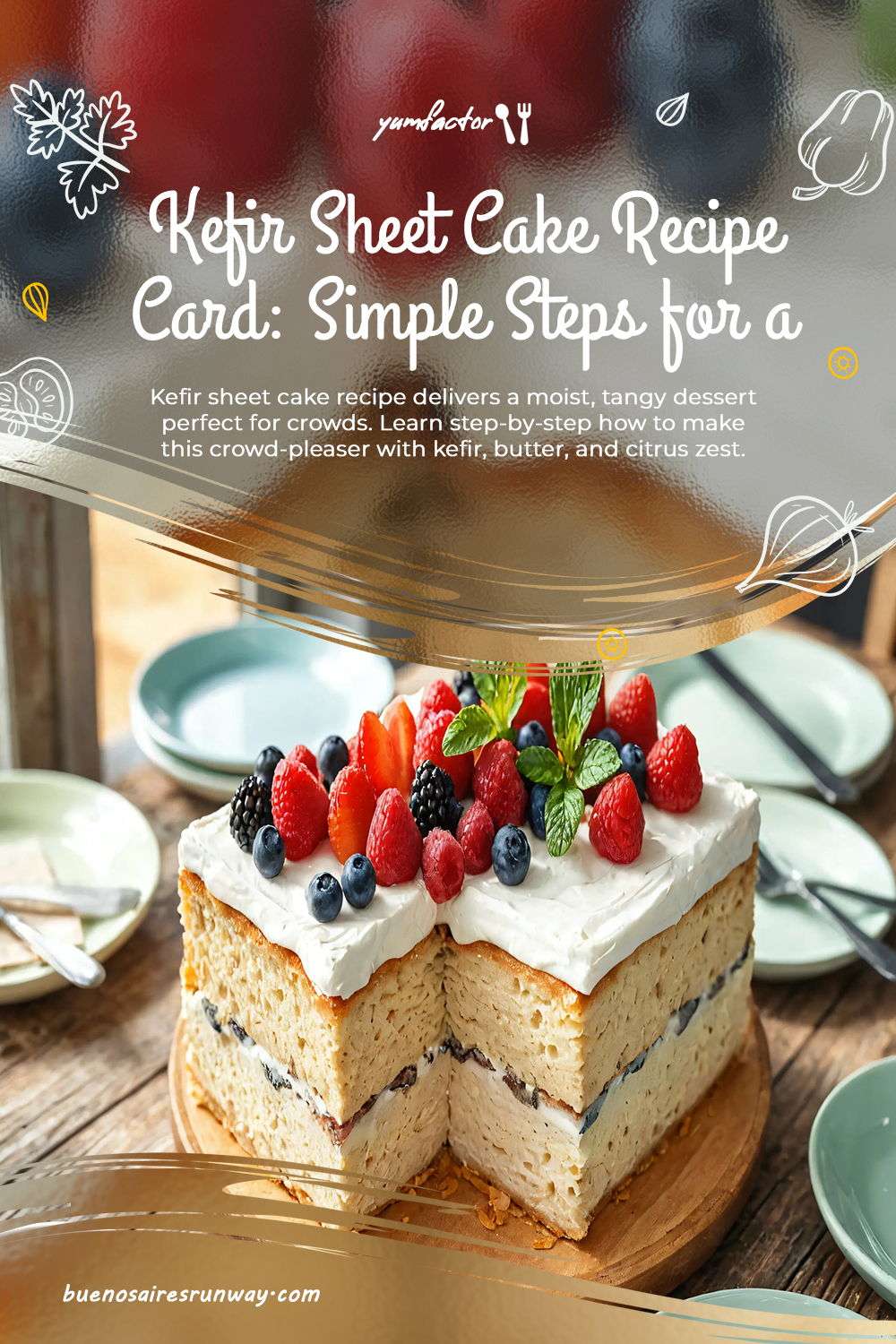
Kefir Sheet Cake: A Crowd-Pleaser
The moment the oven door opens, a gentle tang of cultured milk mingles with the warm aroma of melted butter, promising a cake that is both moist and airy. This kefir sheet cake delivers that surprise on a single pan, making it ideal for gatherings where a single dessert must satisfy many plates. The crumb stays tender thanks to kefir’s natural acidity, while the citrus zest adds a bright lift that cuts through the sweetness. Beginners will find the batter forgiving, families can serve generous slices, and meal‑preppers appreciate the short cooling time before storage. Scroll down to see the ingredient lineup that creates this reliable, crowd‑pleasing sheet cake.
Print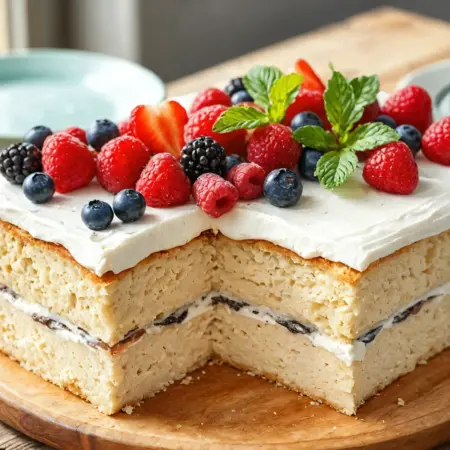
Kefir Sheet Cake Recipe Card: Simple Steps for a Crowd-Pleaser
A moist, tangy sheet cake made with kefir that rises evenly and stays tender, perfect for serving a crowd.
- Total Time: 45
- Yield: 24
Ingredients
✓ 2 cups all-purpose flour
✓ 1 cup kefir
✓ 3 large eggs
✓ ½ cup melted butter
✓ 1 tsp baking powder
✓ ½ tsp baking soda
✓ ½ tsp salt
✓ 1 tsp vanilla extract
✓ 1 tbsp lemon zest
Instructions
✓ Preheat the oven to 350°F / 175°C and position the rack in the middle
✓ Grease a 9×13-inch sheet pan with butter and line with parchment paper
✓ Whisk together flour, baking powder, baking soda, and salt in a large bowl
✓ Beat the eggs with sugar until the mixture lightens in color and volume
✓ Stir in melted butter, kefir, vanilla extract, and lemon zest until just incorporated
✓ Gradually add the dry ingredients to the wet mixture, folding until no streaks remain
✓ Pour the batter into the prepared pan and spread to an even layer
✓ Bake for 25–30 minutes, or until the top is golden brown and a toothpick emerges clean
✓ If edges brown too quickly, tent the pan with foil after 20 minutes
✓ Remove the cake and rest in the pan for 10 minutes
✓ Run a knife around the perimeter, invert onto a cooling rack, and peel off parchment
✓ Cool completely before slicing
✓ Dust with powdered sugar or drizzle a kefir glaze
✓ Cut into 24 squares for standard servings
Notes
Let the cake rest in the pan before turning out; store airtight for up to 4 days.
- Prep Time: 15
- Cook Time: 30
- Category: Desserts
- Cuisine: American
Nutrition
- Calories: 350
- Sugar: 22
- Sodium: 250
- Fat: 14
- Carbohydrates: 48
- Fiber: 2
- Protein: 6
Ingredients
- 2 cups all‑purpose flour – provides structure and crumb; substitute whole‑wheat flour for a nuttier texture
- 1 cup granulated sugar – sweetens and tenderizes; substitute coconut sugar for a deeper flavor
- 1 cup kefir – adds moisture, tenderness, and a subtle tang; substitute plain yogurt if kefir unavailable
- 3 large eggs – contributes richness, structure, and moisture; substitute 3 × ¼ cup unsweetened applesauce for a vegan version
- ½ cup melted butter – contributes richness and a tender crumb; substitute neutral oil for a dairy‑free option
- 1 tsp baking powder – leavening agent that helps the cake rise; no direct substitute needed
- ½ tsp baking soda – works with kefir’s acidity for lift; omit if using self‑rising flour
- ½ tsp salt – enhances the other flavors; no substitute needed
- 1 tsp vanilla extract – provides warmth and character; substitute almond extract for a nutty note
- 1 tbsp lemon zest – adds a bright, refreshing note; substitute orange zest for a sweeter citrus
This exact combination balances acidity, fat, and leavening so the cake rises evenly while staying moist.
Step‑by‑Step Instructions
Preparation
- Preheat the oven to 350°F / 175°C and position the rack in the middle (ensures even heat distribution).
- Grease a 9 × 13‑inch sheet pan with a thin layer of butter, then line the base with parchment paper (prevents sticking).
- In a large bowl, whisk together flour, baking powder, baking soda, and salt until uniformly combined (no pockets of leavening).
- In a separate bowl, beat the eggs with sugar until the mixture lightens in color and volume (about 2 minutes).
- Stir in melted butter, kefir, vanilla extract, and lemon zest until just incorporated (do not overmix – overdevelopment of gluten makes texture tough).
- Gradually add the dry ingredients to the wet mixture, folding with a spatula until no streaks remain (the batter should be smooth and slightly thick).
- Pour the batter into the prepared pan, spreading it with an offset spatula to an even layer (visual cue: batter should reach the pan’s edges uniformly).
Cooking
- Place the pan in the preheated oven and bake for 25–30 minutes, or until the top turns a light golden brown and a toothpick inserted in the center emerges clean (no wet batter).
- If the edges brown too quickly, tent the pan loosely with aluminum foil after 20 minutes (prevents over‑browning).
Assembly
- Remove the cake from the oven and let it rest in the pan for 10 minutes (allows steam to finish cooking the interior).
- Run a thin knife around the perimeter, then invert the cake onto a cooling rack; peel off the parchment paper (helps prevent soggy bottom).
- Allow the cake to cool completely before slicing (the crumb sets fully when cool).
Serving
- Dust the surface lightly with powdered sugar or drizzle a simple glaze made from powdered sugar mixed with a splash of kefir (adds a subtle tangy glaze).
- Cut into 24 squares for standard servings; larger pieces serve a crowd of eight (visual cue: each piece should hold its shape without crumbling).
The kefir sheet cake is ready when the top is golden, the interior springs back gently to the touch, and a toothpick comes out clean.

Why This Recipe Works
The key to a tender crumb lies in kefir’s natural acidity, which reacts with baking soda to create carbon dioxide bubbles that lift the batter. This reaction occurs early in the bake, giving the cake an even rise without a dense center. The melted butter, introduced while the batter is still warm, coats flour particles, limiting gluten formation and ensuring a soft texture. Adding citrus zest not only brightens the flavor profile but also contributes volatile oils that evaporate during baking, leaving a fragrant finish. Chilling the batter isn’t required because the kefir already provides enough moisture to keep the crumb moist, yet the batter’s thickness prevents spreading, resulting in a uniform sheet. Combining these elements creates a cake that is both airy and moist, outperforming traditional milk‑based sheet cakes that can become dry.
Tips for Reliable Results
- If the batter looks too thin after adding the flour, let it sit for 5 minutes; the flour will absorb excess liquid, preventing a flat cake.
- When the edges start to darken before the center is set, loosely cover the pan with foil; this shields the outer layer while the interior finishes baking.
- Use a light‑colored metal pan rather than a dark one; dark pans conduct heat faster and can cause premature browning.
- Measure flour with the spoon‑and‑level method; packing flour leads to a dense crumb.
- For a richer flavor, substitute half of the butter with melted coconut oil; the oil adds a subtle coconut note without affecting structure.
- If the cake cracks while cooling, it indicates it was removed from the pan too early; allow the full 10‑minute rest before inversion.
- Make‑ahead tip: bake the cake a day ahead, wrap tightly in plastic, and store at room temperature; the flavor actually mellows and improves after a few hours.
- Storage: keep slices in an airtight container for up to 4 days; reheating a slice briefly in a toaster oven revives the crust.
Variations
- Pumpkin Spice Kefir Cake – replace ½ cup kefir with ½ cup pumpkin puree and add 1 tsp pumpkin pie spice; the puree adds moisture while the spice creates a warm autumn profile.
- Rhubarb Kefir Cake – fold in 1 cup diced fresh rhubarb and increase lemon zest to 2 tbsp; the tart rhubarb pairs with kefir’s tang, producing a bright spring dessert.
- Blueberry Kefir Shortcake – sprinkle 1 cup fresh blueberries over the batter before baking; the berries burst, leaving pockets of juicy sweetness throughout the crumb.
- Vegan Gluten‑Free Version – use a 1:1 gluten‑free flour blend, replace butter with ½ cup coconut oil, and swap kefir for 1 cup coconut‑milk yogurt; the texture remains tender while accommodating dietary restrictions.
Time and Yield
Prep time: 15 minutes
Cook time: 30 minutes
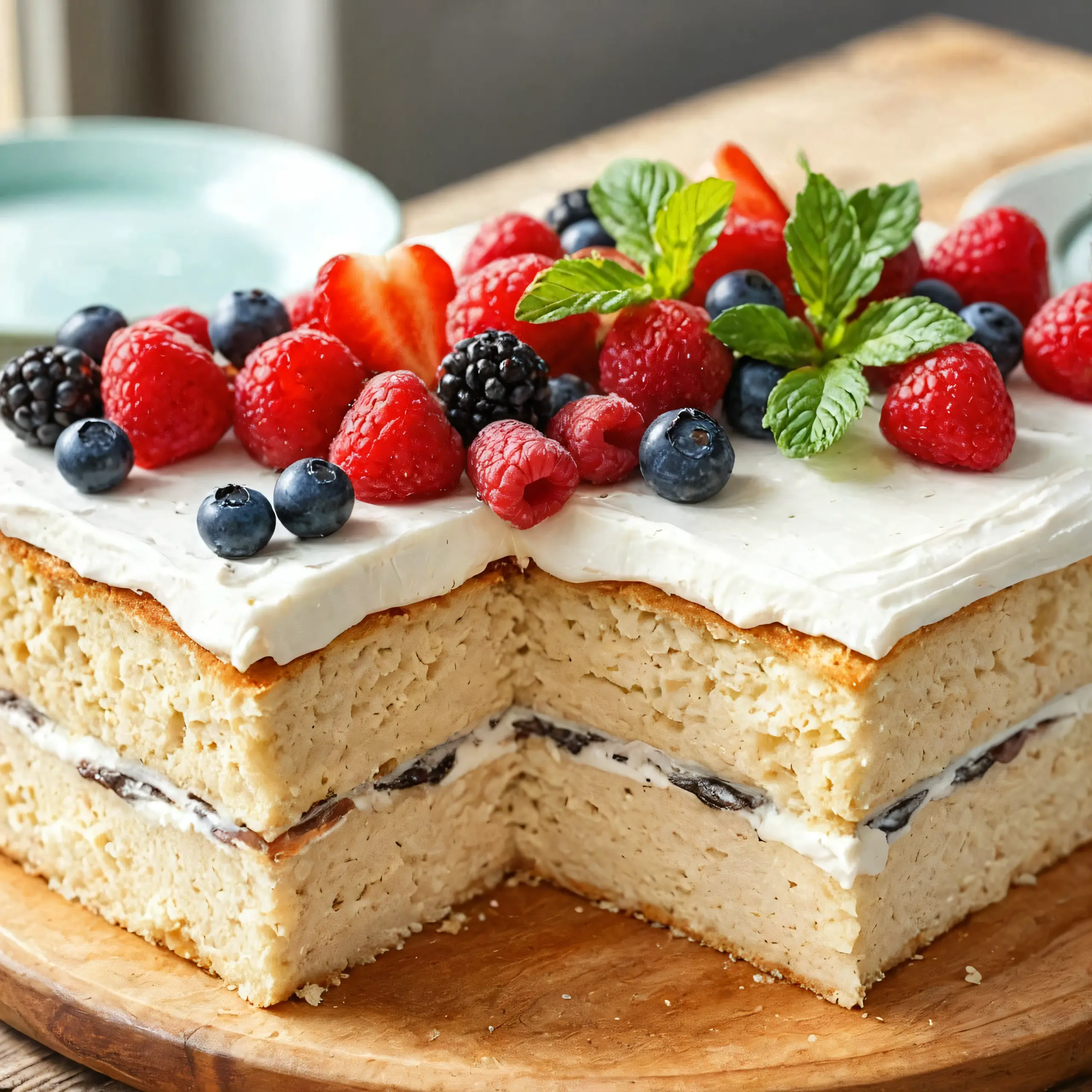
Cooling time: 15 minutes
Total time: 60 minutes
Yield: 24 servings (standard 2‑inch squares)
Frequently Asked Questions
- Can I use low‑fat kefir instead of regular kefir?
Yes, low‑fat kefir works, but the reduced fat may yield a slightly less tender crumb. Adding a tablespoon of oil can compensate for the missing richness. - Why did my cake turn out dense and heavy?
Overmixing the batter develops gluten, leading to a dense texture. Mix only until ingredients are just combined, and ensure the flour is measured correctly. - How long can I store the cake at room temperature?
When wrapped tightly, the cake stays fresh for up to four days. For longer storage, refrigerate in an airtight container for up to one week. - Can I freeze the baked cake?
Absolutely. Slice the cake, wrap each piece in plastic wrap, then place in a freezer bag. Thaw at room temperature and optionally warm briefly before serving. - Is it possible to add a frosting without overpowering the kefir flavor?
A light glaze made from powdered sugar and a splash of kefir preserves the tang while adding sweetness. Alternatively, a thin cream cheese frosting with a touch of lemon zest complements the cake without masking its character.
Conclusion
This kefir sheet cake proves that a single‑pan dessert can be both moist and airy without complicated steps. The balanced chemistry of kefir, butter, and leavening agents creates a reliable crumb that holds up to slicing and serving. While the base recipe is sturdy, the suggested variations invite seasonal twists and dietary adaptations, encouraging cooks to experiment with pumpkin, rhubarb, or berries. With the tips provided, the cake will consistently rise, stay tender, and transport well, making it the perfect centerpiece for any gathering.