Butter and flour blend to form the foundation of countless sauces, soups, and stews. A roux—simple in concept but complex in technique—is the golden bridge between raw ingredients and a perfectly thickened, creamy, or glossy dish. Whether you’re making a classic béchamel, a rich Creole gumbo, or a velvety gravy, mastering the roux is essential for any home cook or chef. The magic lies not just in the ingredients, but in how you handle them, timing, and temperature. Understanding how to build a roux from light to dark, and how to incorporate liquids safely, will elevate your cooking and prevent common disasters like seizing or lumpy sauces.
Print
How to Make the Perfect Roux: Light to Dark Mastery
A comprehensive guide to mastering the art of roux, from light to dark, with tips on how to incorporate liquids and avoid common mistakes.
- Total Time: 15
- Yield: 4
Ingredients
✓ Warm the liquid first. Always heat up stock, milk, or cream before whisking it into the roux. Adding cold liquid to a hot roux can cause it to seize and break.
✓ Warm it up. If using a pre-made roux (homemade or store bought), warm it up before adding it to your dish, but be careful not to darken it further.
✓ Pour off the oil, or don’t. If using a pre-made roux, some oil may separate to the top during storage. You can choose to stir it back in, or discard the oil layer. Removing it won’t change the flavor of the roux.
Instructions
✓ Warm your liquid to about 160°F before adding it to the roux to prevent seizing.
✓ Whisk the warm liquid into the roux gradually, incorporating each addition fully before adding more.
✓ If using a pre-made roux, gently warm it before incorporating into your dish.
✓ Decide whether to stir back or pour off any separated oil from a pre-made roux before using.
Notes
Always preheat liquids before adding to roux. Add ingredients gradually to prevent shocking the roux.
- Prep Time: 5
- Cook Time: 10
- Category: Sauce
- Cuisine: French/Cajun
Nutrition
- Calories: 350
- Sugar: 8
- Sodium: 400
- Fat: 12
- Carbohydrates: 45
- Fiber: 5
- Protein: 15
The key to a successful roux begins with the basic ingredients: butter and flour. A roux is made by combining equal parts of fat (typically butter) and flour, then heating them together until they form a paste. The process starts with a roux that’s light in color and flavor, which gradually deepens and develops more complex notes as it cooks longer. But the most important tip is to always warm your liquid before adding it to the roux. Cold liquid added to a hot roux causes the fat to seize, resulting in a broken sauce that will never smooth out. This is a common mistake, especially when making a sauce in a hurry. Instead, preheat your stock, milk, or cream to around 160°F (70°C) before whisking it into the roux. This ensures that the mixture remains smooth and thickens properly.
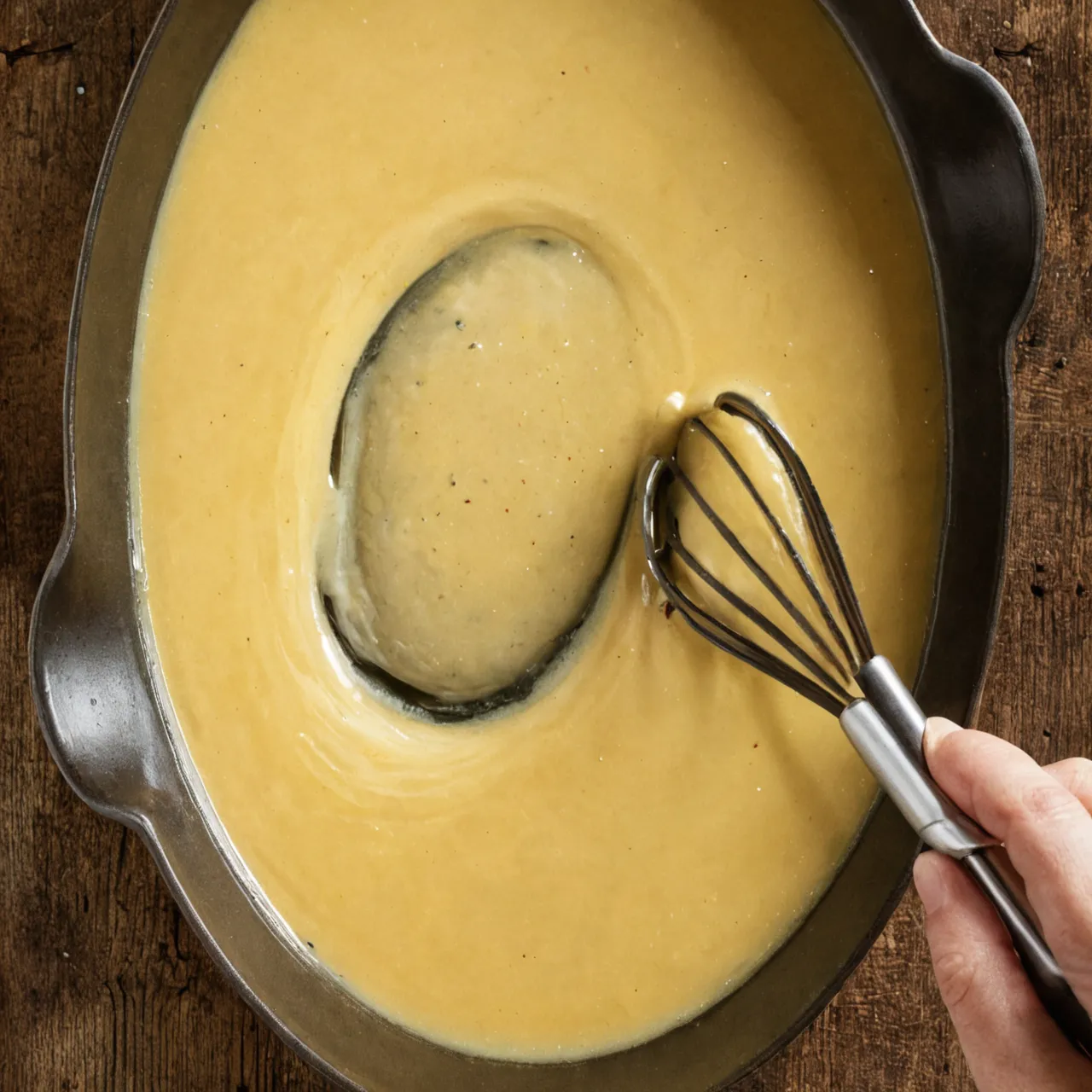
Another crucial element is adding liquid gradually. This may seem like common sense, but many cooks rush this step and add too much liquid too quickly. Begin by slowly drizzling the warm liquid into the roux while whisking constantly. Each addition should be fully incorporated before adding the next. This method prevents lumps and ensures even heat distribution. It’s also true when adding ingredients like the Cajun trinity (onion, celery, and bell pepper) to a roux for gumbo. Add these vegetables in small amounts, stirring them in gradually so that the roux doesn’t “shock” and lose its structure. The process of adding ingredients slowly is not just about technique—it’s about maintaining control over your final dish.
If you’re working with a pre-made roux, warming it up before using it is essential. Whether homemade or purchased from a store, a roux that has been stored may have separated, especially if oil has risen to the top. You can choose to stir this oil back in or pour it off, depending on your preference. The oil itself doesn’t significantly alter the flavor of the roux, but it can affect the texture and consistency of your final dish. If you’re aiming for a lighter roux, removing the oil layer is the safer choice. But if you’re looking to maintain richness and body, stirring it back in works well. Be careful not to overheat a pre-made roux, as it can darken and lose its intended flavor profile. The goal is to warm it gently and incorporate it smoothly into your dish.

Roux variations are not just about color, but also about function. Light roux is ideal for white sauces like béchamel, where a subtle flavor and pale appearance are desired. Medium roux is used in dishes like mornay sauce or some gumbo bases, offering a balance between flavor and thickening power. Dark roux, which is cooked longer and develops a nutty, slightly toasted taste, is perfect for dishes like crawfish étouffee or gumbo, where a deeper, more complex flavor is needed. The timing and heat level are crucial in achieving the desired color and flavor. A roux that’s cooked too long can burn and impart a bitter taste, while one that’s undercooked can leave a raw flour taste in your dish.
Troubleshooting roux issues is part of the learning curve. If your sauce seizes, don’t panic. It’s often recoverable. You can try whisking in a small amount of cold liquid or a splash of hot broth to restart the process. If you’re working with a pre-made roux and it’s too dark or too thick, adjust by adding more liquid or thinning it with a bit of cream or stock. When using a roux for a stew or soup, consider adding it gradually to the simmering liquid rather than incorporating it at the beginning, which can prevent clumping and ensure even thickening.
Storage and use of roux also play a role in its performance. Homemade roux can be stored in the refrigerator for up to a week or frozen for months. When freezing, make sure to place it in an airtight container or wrap it tightly in plastic. If using a frozen roux, allow it to thaw completely before warming it up. It’s also helpful to label your roux with the date and the type of roux (light, medium, dark) to avoid confusion. A well-made roux can be a game-changer, not only in how it thickens a dish but in how it enhances its overall flavor and texture.
Roux is more than just a thickener—it’s a culinary art form. It’s a foundational technique that, once mastered, opens the door to a wide variety of sauces, stews, and soups. Whether you’re making a simple béchamel or a complex gumbo, the roux is the backbone of your dish. Understanding how to properly warm liquids, add ingredients gradually, and control heat and timing will set you apart from the rest. And with practice, you’ll find that a roux becomes second nature, allowing you to create silky, flavorful dishes with confidence and ease.